
Use SkinMedica Dermal Repair Cream as a moisturizer: apply a small amount to clean skin after any serums, and finish with sunscreen in the morning. You can use it once or twice a day depending on how your skin feels, and a little goes a long way.

The Short Version
Cleanse, apply any thin treatments or serums, then smooth on the cream as one of your last steps. In the morning, follow with sunscreen. At night, the cream can be your final step.
That’s the basic routine. The details below can help you fine-tune it for your skin.

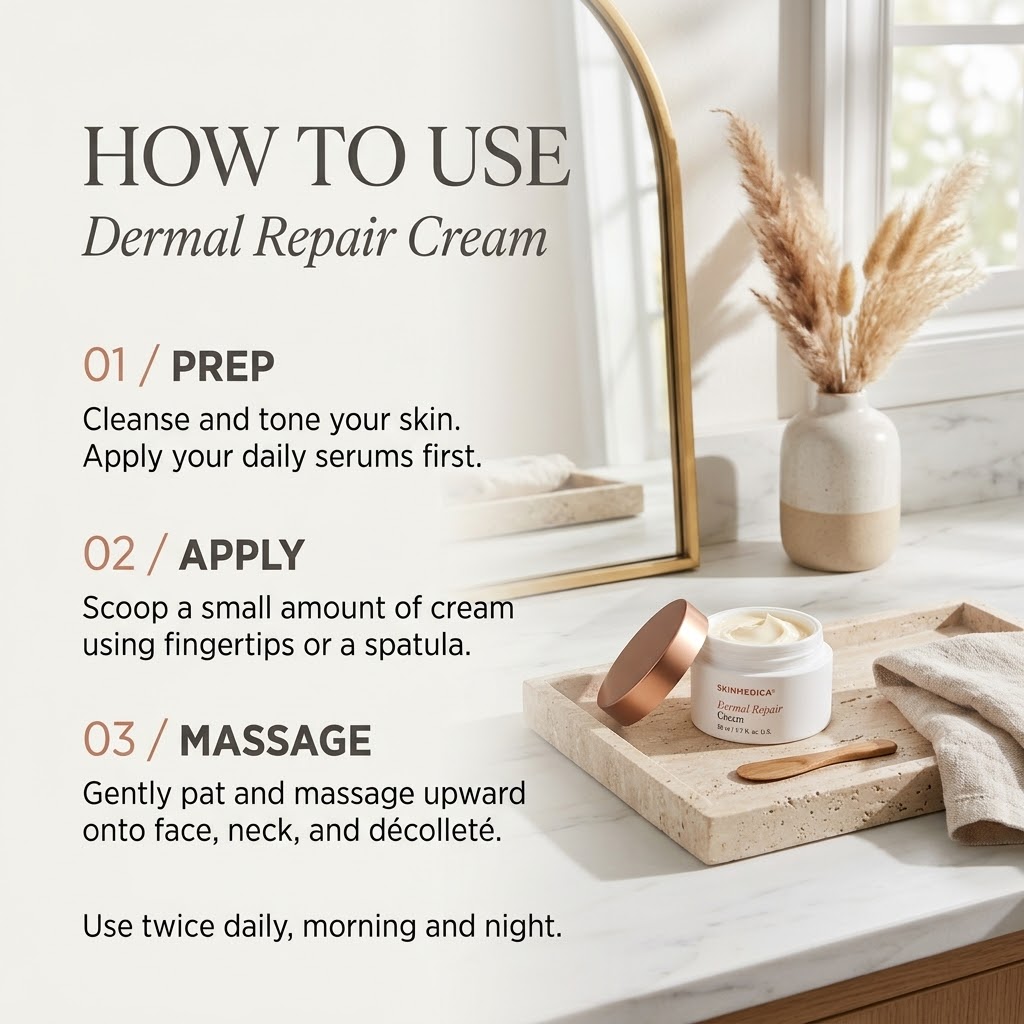
Step-by-Step: How to Apply It
1. Start with clean skin
Wash your face with a gentle cleanser and pat it mostly dry. Skin that’s slightly damp can feel more comfortable with a cream on top, but you don’t need to soak it.
2. Apply serums or treatments first
If you use a lightweight serum, put it on before the cream. As a general rule, go from thinnest to thickest texture. A rich cream sits on top and helps keep everything else in place.
3. Use a modest amount
Start with about a pea-sized to nickel-sized amount for your whole face, and add more only if your skin still feels tight. It’s easy to overdo a cream, and more product doesn’t mean better results. It can just mean a greasy feeling or pilling under sunscreen or makeup.
4. Warm it up and press it in
Dot the cream on your cheeks, forehead, chin, and nose, then smooth it outward with clean fingertips. Gently press it in rather than rubbing hard. Include your neck if you’d like, since it often gets forgotten.
5. Add sunscreen in the morning
Unless the label says the product contains SPF (check your packaging), don’t count on it for sun protection. Let the cream settle for a minute, then apply a broad-spectrum sunscreen as your final daytime step.
Morning, Night, or Both?
Both can work. Many people use a cream like this at night, when there’s no sunscreen or makeup layered on top, and a lighter moisturizer in the morning. If your skin runs dry or you live somewhere with cold, dry air, using it twice a day may feel better.
If you’re new to it, start with once a day for the first week or so. If your skin is comfortable, you can increase from there. For a closer look at texture, feel, and how it wears day to day, our full SkinMedica Dermal Repair Cream review covers it in more detail.
How It Fits With Other Products
A moisturizer is usually one of the easiest products to slot into a routine, but a few pointers help:
- With retinol or other strong actives: Apply your active first, then the cream. Some people like to layer the cream on top to make their routine feel more comfortable.
- With exfoliating acids: On nights you exfoliate, keep the rest of your routine simple. A cream is a good fit here.
- With makeup: If it feels heavy under foundation, use less, or save it for nighttime.
Introduce one new product at a time. If something irritates your skin, you’ll know what caused it.

What to Expect (and the Trade-Offs)
A good moisturizer can make skin feel softer and more comfortable fairly quickly, and over a few weeks it may help the look of dry, dull-looking skin. It won’t change your skin overnight, and no cream can promise dramatic results.
A few honest downsides to keep in mind:
- Price: SkinMedica products tend to sit at the pricier end of the skincare aisle, so using the right amount helps the jar last.
- Texture: Richer creams can feel heavier than a gel or lotion, especially if your skin is oily or you’re in a humid climate.
- Sensitivity: Any product can bother some skin. Always check the ingredient list for anything you know you react to.
Do a Patch Test First
Before using it on your whole face, try a small amount on your inner forearm or behind your ear for a day or two. If you see redness, itching, or burning, stop using it.
If you have persistent redness, a rash, stinging that doesn’t go away, or any skin concern that worries you, check in with a dermatologist. A moisturizer is a cosmetic product and isn’t meant to treat skin conditions.
Frequently Asked Questions
Should I use it before or after serum?
After. Serums are usually thinner, so they go on first. The cream goes over the top as one of your last steps.
Can I use it on my neck and chest?
Many people do, as long as their skin tolerates it. Start with your face first, then extend to the neck once you know your skin is comfortable with it. Skip the eye area unless the label says it’s suitable there.
How long before I notice a difference?
You may notice a more comfortable, moisturized feel right away. Changes in how your skin looks, like smoother or less dull skin, usually take several weeks of consistent use, and results vary from person to person.
The takeaway: apply a small amount to clean skin after your serums, follow with sunscreen in the morning, patch test first, and give it a few weeks before you judge it. If your skin gets irritated or you have a concern beyond dryness, a dermatologist is the right person to ask.
